Learning from the past, living in the moment, and leaving footprints for the future. Stories of lov

Monday, October 29, 2012

Colonial Royal Governor

I was paying more attention to William Brewster my 10th great grandfather who arrived on the Mayflower than I was of his daughter, Patience, from whom I descend. And, even less attention to the man she married, Thomas Prence, until today. It's always amazing to learn about my ancestors and the contributions they made as this new world of ours was being settled and  laws made. In that vein, I introduce my 9th great grandfather, Thomas Prence, Colonial Royal Governor. 

Thomas was the son of Thomas Prence, a carriage-maker, of Lucedale, Co. Gloucestershire, England. His Puritan family joined the Pilgrim community in Leiden (Holland) in Thomas' youth.  He came to America on the ship "Fortune" in 1621 in the twenty-second year of his age with his family. 

 He went to Plymouth Colony, where he gained prominence and was one of eight colonial "undertakers" who assumed (1627) the colony's debt to the London merchants who had backed the establishment of the colony.

He was chosen Governor, and he served as the fourth Governor of Plymouth Colony from 1634 to 1635, then from 1638 to 1639, and again from 1657 until his death in 1673.  Thomas Prence otherwise recorded as Thomas Prince, married Patience Brewster in 1624, the daughter of William Brewster. 

Thomas held various offices, including the governorship (1634-35, 1638, 1657-73.  As governor, he served with credit through a period of Indian wars and internal religious troubles and was noted for his successful effort to secure public revenues in support of schools.  The duties combined with being governor were, Chief Justice, Minister of Foreign Affairs, Speaker of the General Court and Auditor of the Treasury.

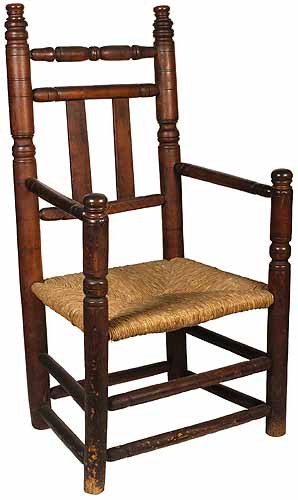
Interestingly, a chair of maple and ash made in Plymouth Colony in the late 17th century that belonged to Thomas Prence survived, and has been passed down by his descendants. It is on display at the Pilgrim Hall Museum in Plymouth.

After he had served God in the office of Governor sixteen years, he died on March 29, 1673 at the age of 73.  "He was a worthy gentleman, very pious, and very able for his office, and faithful in the discharge thereof, studious of peace, a well-willer, to all that feared God, and a terror to the wicked. His death was much lamented, and his body honorably buried at Plymouth. "

Sunday, October 7, 2012

Robert Latham - Quilty of Manslaughter

You can't research your family ancestry without finding a black sheep amongst them. I certainly did find what I call a Black Cloud and Weed. But what I understand is that without this despicable person, Robert Latham my 8th great grandfather, I perhaps would not be here.

In an incident that will shock many, the Plymouth court records show that Robert Latham who married Susanna, the daughter of John Winslow and his wife Mary Chilton, brutally and willfully mistreated his servant boy, John Walker, thus causing his death.  Equally as      disturbing,  Susanna was found culpable as well--though not prosecuted.

(Stratton, Eugene Aubrey, FASG. Plymouth Colony: Its History and People 1620-1691.)

Att a Court of Assistants holden att Plymouth the sixt of Febrewary 1654/5. Before William Bradford, William Collayre, Miles Standish, John Alden and Thomas Willet. The following verdict was ordered to bee recorded:

Marshfield, the last of January 1654

Wee, whose names are vnderwritten, being appointed a jury by Mr. John Alden to view the dead body of John Walker, seruant to Robert Latham, of this towne, and to find the cause how hee came to his vntimely end.

" On 31 January 1654/55 a coroner's jury was called to view the body of Latham's servant boy, John Walker." The jury found:


that the body of John Walker was blackish and blew, and the skine broken in divers places from the middle to the haire of his head, viz, all his backe with stripes given him by his master, Robert Latham, as Robert himselfe did testify; and also wee found a bruise of his left arme, and one of his left hipp, and one great bruise of his brest; and there was the knuckles of one hand and one of his fingers frozen, and alsoe both his heeles frozen, and one of the heeles the flesh was much broken, and alsoe one of his little toes frozen and very much perished, and one of his great toes frozen, and alsoe the side of his foot frozen; and alsoe, upon the reviewing the body, wee found three gaules like holes in the hames, which wee formerly, the body being frozen, thought they had been holes; and alsoe wee find that the said John was forced to carry a logg which was beyond his strength, which hee indeavoring to doe, the logg fell upon him, and hee, being downe, had a stripe or two, as Joseph Beedle doth testify; and wee find that it was some few daies before his death; and wee find, by the testimony of John Howland and John Adams, that heard Robert Latham say that hee gave John Walker som stripes that morning before his death; and alsoe wee find the flesh much broken of the knees of John Walker, and that he did want sufficient food and clothing and lodging, and that the said John did constantly wett his bedd and his cloathes, lying in them, and so suffered by it, his clothes being frozen about him; and that the said John was put forth in the extremity of cold, though thuse unabled by lamenes and sorenes to performe what was required; and therefore in respect of crewelty and hard usage he died.


In the Latham-Walker case, the community view can can be seen in the aftermath, when on 4 March 1654/55 Latham was indicted for felonious cruelty to his servant John Walker, age about fourteen, by unreasonable correction, by withholding necessary food and clothing, and by exposing Walker to extremities of the seasons, whereby he died. The trial jury found him guilty of "manslaughter by chaunce medley," and he was sentenced to be burned in the hand (branded on the hand) and, having no lands, to have all his personal property confiscated. Latham's wife, Susanna, as noted in chapter 9, was presented by the grand jury for being in great measure guilty with her husband in exercising extreme cruelty toward their late servant John Walker. In her case, however, the presentment continued without trial for three years, until the court on 1 June 1658 ordered that she would be held for trial if anyone wished to prosecute her for the offense, but no one came forth, and the court ordered the presentment erased from the records."

Sunday, September 23, 2012

Lewis Gelbach


Lewis Gelbach was born at Bettlehausen, Westphalen, Prussia, Dec. 26, 1833; came to Duncannon, Ps., with his parents in 1846, latter in 1857, to Lancaster, Wisconsin.

October 7, 1860, he was united in marriage to Maria Sophia Napp. They lived in Lancaster until December 1869, when they moved to Hurricane, where his wife departed from this world January 24, 1900.

In February 1901 he again moved to Lancaster, where he died Saturday afternoon about five o'clock, June 26, 1909, at the age of 75 years, 6 months.

He left to mourn his departure six sons and three daughters: John C. of Grangeville, Idaho; Charles H. of Kooskia, Idaho; William L. of South Lancaster; George F. of Albany, Wisconsin; Mary E. at home; Nettie L. (Mrs Charles Dolphin), of South Lancaster; Fred N. of Houser, North Dakota; Ida L. (Mrs Samuel E. Kemper), of Lancaster; Warren A. of Mt. Vernon, Washington.

Also thirteen grandchildren, three brothers and one sister: George of Spokane, Washington; Charles and Daniel, and Mrs Elizabeth Baker of Duncannon, Pa.

Mr. Gelbach was a loving husband, kind father and as honest, true and good hearted a man as could be found anywhere.

Why should our tears in sorrow flow
When God recalls his own,
And bids them leave a world of woe
For an immortal crown?

Is not e'en death a gain to those
Whose life to God has given?

Gladly to earth their eyes to close
To open them in heaven.
His toils are past, his work is done,
And he is fully blest!
He fought the fight, the victory won,
Then entered into rest.

Then let our sorrows cease to flow,---
God has recalled his own;
But let our hearts, in every woe,
Still say, Thy will be done.

Mr. Gelbach was a member of the Odd Fellows Lodge of Lancaster. He also was a firm believer in the teaching of God, always attending church when his health permitted. Mr. Gelbach also enjoyed company and meeting his friends to the last.

The funeral was held Tuesday afternoon at the M. E. Church which was filled with sympathizing friends who gathered to pay their last respects to the departed one. Rev. J.T. Morgans delivered a touching sermon.

The remains were laid to rest by the side of his wife in the Hillside cemetery.

from a Lancaster, Wisconsin newspaper

Thursday, September 20, 2012

The Wreck To Our Place

I'm grateful that no one in my family was injured when this large truck crashed into my grandparents business and took the gas pumps out as well as the awning that covered them.  If my great grandfather, grandfather, grandmother was pumping gas, they would have been killed. It was also not uncommon for customers to be standing nearby or even children playing for the main house sat right next door.  I'm surprised that there was no fire or explosion.


They way it looked when first built.
My mother is the little girl watching her grandfather pump gas.


Sunday, September 16, 2012

An Honorable Man Dies

Russell Cardey
My 3rd Great Grandfather


Potosi, Wisconsin - Jan 29, 1894

Another name is entered in the record of immortal life-- another father, friend and fellow mortal has gone to his reward, where all tears are wiped away-- all sorrows cease and partings are no more.

On Friday night, the 26th, as the clock chimed the midnight hour, the spirit of Russell Cardey passed quietly to its maker; death printed on his placid features, the insignia of his pallid realm. From the warm precincts of the mortal-- became a dweller in that better land where the stars are dimmed with passing clouds-- where the moon withdraws her silver beams, and the sun
itself often hides its glories behind the dark clouds of adversity, the good old man passed away-- became a dweller in that better land where the stars never fade and whose glories are undimmed through endless years. Blissful transition from the cold, dreary pastimes of earth, to the radiant, endless joys of eternal life.

The history of Mr. Cardey extends over a period of nearly seventy-seven
years. He was born at Palmyra, in Tioga County, NY, May 8, 1817. His
father was of Irish birth and his mother's family from Vermont, named
Stephenson. She died when Russell was only 17 months old, leaving him nearly
an orphan in the world. When a boy he lived mostly among strangers and
struggled for a living. He was married at Hamburg, Erie County, N.Y., August
8, 1842, to Miss Mercy Ann Hampton, aunt of George W. Hampton of Lancaster.
They lived happily together forty-four years; two children survive them.
George W. Cardey(-157) who resides on the old homestead where he was raised and
where mother and father now both lie buried, and Mrs. Philip Roesch who
lives in Potosi. Mrs. Cardey was a woman of much intelligence and many
excellent traits and her death which occurred March 22, 1888, was sincerely
mourned by her family and friends.

The deceased first came to Wisconsin in 1839, where he labored for day
wages taking Mineral Point money for pay, which proved worthless. Getting a
log cabin in the Hurricane woods, he returned afterward to NY for his
esteemed wife who came cheerfully to pass her younger days in the wilderness of
Wisconsin. They lived frugally, toiled industriously and were rewarded with a
pleasant home in which to spend the evening of life. He removed to his
present farm in 1850, building a comfortable stone house thereon and adorning
it with shrubbery, vines and fruit trees. His vines bore the largest berries
and his bushes the brightest flowers, in all the country side. It was a
pleasure and delight to go, on a bright autumnal day and there see standing in
all their exuberance of growth and bright array of foliage and flower, the
result of their tasteful industry; one could listen the while to the quiet,
intelligent conversation of those whose industrial hands and ideas of
refinement and pleasure, had made the prairie and the hills bloom as a garden;
and now, when long years of toil and approaching infirmities admonished them
the sun of their existence was declining, they could enjoy in ease, contentment
and pleasantness, their bright beautiful earthly home.

The husbandman has gone-- the hand that trailed the vine and planted the
lovely flowers is cold in death. May we not hope, in the paradise of God,
where they are transferred, they may find kindred employment, and congenial
tasks-- where faddess (sic) flowers and perennial fruits forever flourish
beneath the sweet dews of heaven and the smiling sun of righteousness.

To those who personally and well knew Russell Cardey, to dwell upon his
worth and speak of his many kindly traits of character, were a useless task.
His integrity, his constancy to truth, his sincerity of heart, his undeviating
adherance to the line of rectitude, in all his transactions with men, however
simple or unimportant, were proverbial and well known. No man ever received
wrong at his hands knowingly, and no man doubted his word once pledged. To do
right and live honestly and peacefully with the world, were the aim and object
of his life. Thus, for over a half century, he dwelt among his neighbors
without strife or offense; and, now, in the fullness of his years and the
plentitude of his honors, peacefully and tranquilly, he has departed from the
scene of his labors. The memory of his long, useful life, his peaceful
character, his earnest and diligent ways will survive the tomb and become a
sweet and enduring heritage to his family and friends.

Mr. Cardey was a member of the M.E. church with which he fellowshipped for
many years, he was more, he was a member of the human family, seeking truth,
virtue and holiness in the lowly walks of life, and by work, deed and example
striving to make the world better, lovelier, happier for his having lived.

The funeral took place Sunday from the family residence some five miles
northwest of Potosi. The services were conducted by Rev. Mr. Curtiss, of
Ellenboro, pastor of the United Bretheren Church. There was a large
attendance.
Thursday, September 13, 2012

The Harbor City

My great grandfather. William Russell Roesch, Mayor of Eau Gallie, Florida and founder of the Eau Gallie Record newspaper, once said, " The writer has made his home here since 1883 with varied degrees of success in a financial way, but always looking forward to the time when Eau Gallie would become one of the foremost cities of the east coast". 

He was always promoting the area that he loved.  When he arrived here in November of 1883 he said of this place, "With a lavish hand nature has bestowed upon this little city many things that have been withheld from other less favored localities.  No place has a brighter prospect for the future".

In the early 1900's William put together this booklet, "Eau Gallie, The Harbor City", to describe all that the area had to offer.  It tells the story of Eau Gallie's accomplishments, history, fishing, transportation, boating & water sports, school & church's, graves, gardens and farms, It's location, health, conditions and surroundings, and it's future. The remainder of the book are old photographs of all the historic buildings in Eau Gallie, including Roesch's Highland cottages on Highland Avenue.

This booklet belonged to his daughter-in-law, my grandmother, Florence. She signed her name along the top. This treasure has been passed down to me.

Monday, September 10, 2012

Ever Been Broke

William standing in failed crop
By 1932, due to the terrible depression, many banks had closed their doors.  Money was difficult to come by and jobs were just not available.  The watermelon crop he grew to earn money by selling them dried up and turned to dust for there was no rain that summer. With no money, it was difficult to even buy food. His wife had wilted to 96 pounds and he became a stick of a man.

So my grandfather, William Phillip Roesch wrote this letter on December 10, 1932 in desperation to find work.

"Dear Colonel:"

     "In spite of the fact that for the first time in many long, lean years we of the Democratic faith are about to be allowed to come within smelling distance of the trough containing the dainty morsels known to the vulgar as federal jobs.  Along with about sixty per cent of our citizens I am getting ready to make a play for the postmastership at Eau Gallie, and am taking the liberty of using your name as a reference as to my political faith, general cussedness and disability.
     "Of course this is looking far into the future and anticipating what will happen, but when the time gets ripe I will certainly appreciate your support of my application.
     "I believe I spoke to you one time about a slight change we want made in Eau Gallie's charter at the 1933 session of legislature, but being so full of political warring at the time I have forgotten the conversation.  At present our City clerk is an elective office and a number of us believe that it should be made appointive.  Will it be necessary to advertise our intentions and if so how and for how long a time?
     "Thanking you for past favors and awaiting our reply concerning above,
I am,
Very truly yours,
W. Phil Roesch"

(1) Noah Butt replied on December 13, 1932

     "I have yours of the 10th and wish to advise you that it will be my pleasure to assist you, along the line mentioned in your letter, at the proper time.
     "When the time is right for such a move prepare for my signature such endorsement as you wish me to sign."

Two years later on Jan 21, 1934 my grandfather wrote Noah Butt once again.

"Dear Colonel:"

     "Referring to our correspondence of December 1932 concerning my application for the postmaster's job in Eau Gallie. 
     "The Civil Service Commission will hold an examination about February 5th to fill this position.  Should I be in the list of eligibles I will need your help.
     "P.S.  I have not forgotten the fact that I am indebted to you to the tune of a few dollars, but, colonel, have you ever been broke?  However, if the Lord or Mark Wilcox will smile on me maybe I can catch up again."
Very truly yours
W Phil Roesch"

Later that year Bill received a copy of a letter from Noah Butt that he had written to the (2) Honorable J. Mark Wilcox, M.C.  It Read:
    
      "The undersigned, being a qualified Democratic elector and a patron of Eau Gallie, Florida post office, respectfully recommend W. Phil Roesch to you as my choice of those eligible for the position of Postmaster of Eau Gallie and assure you any effort you may make toward securing such appointment for Mr. Roesch will be appreciated."


Ultimately, William was not appointed for the postmast position.

(l) Colonel Noah Butt, former speaker of the Florida House of Representatives and was chairman of the Canaveral Port Authority.

(2) Honorable James Mark Wilcox was a U.S. Representative from Florida.  He was graduated from the law department of Mercer University, Macon, Georgia in 1910 and admitted to the bar that same year.

Wednesday, September 5, 2012

Gold Rush

Thomas Warren Pierce, my paternal 2nd great grandfather was born January 17, 1842  in Rock Village, Middleboro, Massachusetts.  He ventured off to California with his friend Phillip, like many other young men, in search of their fortune during the gold rush.

 Like most, what he didn't find was gold. He did take note however, of how others were spending their hard earned cash. The men were purchasing picks, shovels, boots, pans and other supplies in their pursuit of finding very little.  Most lost the money they went west with, very few in comparison left being a rich man.

Thomas went home, became a door-to-door salesman for a time in the town of New Bedford saving his money.  It was here that he met his future wife, the widow Mary Ann Besse.   They were wed on May 27, 1865 in Mattapoisett, Massachusetts.

The couple moved back to his hometown of Middleboro, where he put his gold hunting experience and knowledge to work.  He learned that men needed supplies and he would be the one to supply it.  He eventually became owner of the Pierce Hardware Store.

During his whole career he was always considering carefully the wants and needs of his customers and the growth of his business was attributed to his integrity.  His entire working life was devoted to his business and almost to the day of his death was offering advise and council as to the conduct of business.

After being confined in bed for a short of period of time, Thomas died at home on June 27, 1910 from heart trouble at the age of 68 . 

Note: Discovered that a bathtub from his store is in the Middleboro Historical Museum on Jackson Street.

Monday, August 27, 2012

Spanish Land Grant

Spanish Land Grant to Spicer Christopher, my 4th gr grandfather, for 100 acres on Talbot Island in 1807. (Courtesy Florida Memory Archives )

Spicer Christopher was the son of John and Martha Watson Christopher.  He married Mary Greenwood, daughter of William and Elizabeth Bryan of land in what is now Nassau County, including all of Talbot Island.  He had fine cattle, pedigreed mares, and raised horses.  He was a Protestant but under the Spanish rule had to swear allegiance to the Spanish Monarch, and turned Catholic. 

He died in 1811 and asked to be buried by the rites of the Church of England.  He left his wife half of his livestock, 29 slaves, and the right to live on any of his plantation for life. 

Son John Bluet Christopher got five slaves and the San Cristóbal Plantation on the St. Johns River. Son William Bluet Christopher got five slaves and the Old Town Homestead on the St. Mary's.  Lewis got five slaves and the north half of Talbot Island called San Carlos.

Daughter Elizabeth who married John Houston 1st, my 3rd great grandparents, got the southern half of Talbot Island called Santa Maria Plantation. 

All in all, Spicer owned and operated five plantations. "Old township" on the St. Mary's; Santa Maria at the mouth of Nassau River; Isabella Plantation, now known as Punta de Hazzard or Point Hazzard; San Carlos, North of and near St. John's River still called San Carlos.

Source: Helen B Hodges; Helen Jones Smitherman: June Elvington Smith in "Pioneers of Florida's First Coast" Vol I pg. 118 compiled by The Southern Genealogist Exchange Society.

Tuesday, August 21, 2012

Big Talbot Island


We took a little side trip to visit Big Talbot Island, Florida on our way to Cocoa where we stay for a month during the winter. The Island is located just north of Jacksonville, Florida. 

Today the island is a state park, primarily a natural preserve, providing a premier location for nature study, bird–watching, or photography. You can also go hiking, bicycling, fishing, boating, canoeing, kayaking, and picnicking. There are even picnic pavilions, nature trails, a fishing pier, a boat ramp, bike trails and beaches.  So there is lots to do there including learning about history and visiting the historic sites.

John Carrol Houston, my 4th great grandfather, a Revolutionary War veteran of South Carolina, born about 1755, came to East Florida from Georgia about 1808. His wife was Jane Harvey, born about 1758 in Beaufort, South Carolina. They settled on Big Talbot Island, and at his death after Florida became a territory, and with his eldest son, John, had acquired several land grants.

The Houston's came to America from Ireland some years before the Revolutionary War.  General Samuel Houston of Texas fame is said to be a cousin of John Carrol Houston through a brother who went to Tennessee.
John Houston's grandson, John C Houston III, had a daughter Ada.  She married William Russell Roesch who became the first mayor of Eau Gallie, Florida. It is said that General Samuel Houston came to visit his cousin John Carrol Houston III in Eau Gallie.  So I take pride in saying that I am a cousin to General Houston.

On April 17, 2010, The Daughters of the American Revolution's local chapter dedicated a plaque to Revolutionary War Capt. John Carroll Houston at his family cemetery on Big Talbot Island. 

Houston served in the Revolutionary War with the South Carolina militia, listed as a rebel in the battles against the Spanish in Florida and one of the Founders of Duval County.  He was buried in the Houston family cemetery on Talbot Island, once part of the Christopher/Houston Plantation.  Five Civil War soldiers are also buried in the cemetery, which contains the oldest marked grave in Duval County. 

About 150 people attended the plaque dedication, including family members from as far away as Miami and Atlanta.


Related Posts Plugin for WordPress, Blogger...