Learning from the past, living in the moment, and leaving footprints for the future. Stories of lov

Showing posts with label German roots. Show all posts

Thursday, December 29, 2022

Jürgen Trapp- Texting My German Cousin


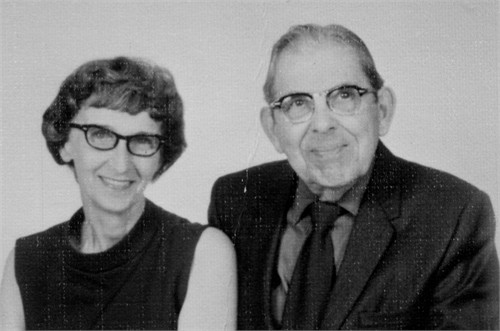
Jürgen Trapp, son of Emil and Elizabetha Trapp

One of the greatest joys genealogy has given me was discovering my cousin, Jürgen Trapp, who lives in Sasbackwalden, Germany along the Black Forest. He is my 6th cousin 1X removed.  We connect through my 5th great aunt, Christiana Rosch, when she married Josef Bruder, his great grandfather, on February 26, 1781. Their daughter, Hermine, was his grandmother.

It has been such a joy getting to know him and his family, his wife Elke, three daughters. Anna, Lisa, and Lena, and son Alexander. He has shared stories, pictures and legends of the homeland. Some of which I have written about in my book " Forever Laced, A Journey through Two Centuries, but had never actually seen until now through his pictures.

My third great grandparents, Mathias Rosch and Magdalena lived in Sasbachwalden, a Black Forest municipality in Western Baden-Wurttemberg Germany.  It is located on the western slopes of the the Hornisgrinde Mountain located in the Northern Black Forest and belongs to the district of Ortenau. More than 70% of the town is forest.  They lived along the Oos River at the bottom of the Black Forest. Jürgen has brought my German ancestry to life.

Jürgen has a big heart. When Russia invaded Ukraine and the people had to flee to other countries, many Ukrainians went to Germany, Jürgen took in Tetianna, and her two children, Anna and little Alex while her husband was fighting the war.  Then he also worked to find apartments for the refugees .


  Christiana Rosch and Josef Bruder 
       parents of Hermine  


 Home of Christiana Rosch and Josef Bruder, 
Marberg, Germany
   (Today it is a hotel)


Following, are various views of Jürgen's ancestral home. He is the third generation to live in this house.  Painted on his house is evidence of the love of his family and his history.  The first two names side by side are his name, Jürgen Trapp and his wife Elke. Next are his parents, Emil and Elizabetha Trapp, then his grandparents Hermine and Emil Trapp.

Below that are two Coat of Arms in memory of his grandparents and parents who built the house. The Coat of arms of Sasbachwalden with the fir tree is for his grandparents Hermine, Emil and himself. The second Coat of Arms of Lauf is for his parents, Emil. Elizabetha, and his wife Elfe who are all from Lauf.

Below that is a saying by Hoffmann Von Fallersleben, who also composed the German national anthem.

"Like the oaks striving towards the sky, despite the storms, we want to be like them, free, and firm, like Germans oaks lifting out heads."


His text messages always begin with,  

"To My Dear Cousin." He became a grandfather for the first time this year, 2022.

He shared with me his Christmas and Easter traditions:


"You can say sauerbraten, is our national dish here in the southwest of Germany, especially in our region here.  
At Christmas the children are all there and Elke's parents, of course. It has always been like this at Christmas and Easter".

"On Christmas Eve, we traditionally serve sauerbraten noodles and potato dumplings. This is a festive meal with a long tradition here in the Black Forest, Sauerbraten ..... is a piece of beef that is pickled in red wine vinegar with bay leaves for a few days. After souring, the meat is seared and then left on the fire for a long time.
Everyone is already looking forward to it".

"With all that we have shared, and yet to share, me learning more about my German ancestors, he learning more about his American ancestors, has brought us closer together. We are both enamored with our family and its' history, indeed we are, dear cousins.


Thursday, May 10, 2012

Celestin Kaltenbach - Elected Official

Celestine Kaltenbach was born in Baden, Germany in 1813 and then coming to Potosi, Wisconsin.  In 1853 he was made Town Treasurer, the first town office to be held by a German. 

He  became the Dean of Postmasters in the United States holding that office from 1837 to the time of his death, March 18, 1891, at the age of 78. 

Before coming to Potosi he had mined iron for three years about Dubuque.  On coming to the "Hollow" he started a store (in the location then known as Van Buren) which he carried on for more than fifty years.  He held several town offices and was so much esteemed in the community that to hundreds his advice or admonition was law.

His grandson, Celestine David, named for him married into the Roesch family when he wed Gwendolyn September 26, 1934. 

He graduated from Potosi High School in 1918 and went to Duluth, MN to study electricity.  He was a mailclerk at St. Paul in 1919.  He worked for years in Potosi State Bank starting in April 1923, and was postmaster for 34 years prior to his 1968 retirement. On September 26, 1934 he married Gwendolyn A. Roesch.   A member of Grant County and State Historical Societies; National Legion of Postmasters and American Legion WWI veteran.  They lived at Whitewater after 1987. 

Gwen passed away in an assisted  living facility.  Her obituary read as follows:


POTOSI/WHITEWATER—
Gwendolyn Alice (Roesch) Kaltenbach, 86, formerly of Potosi, died Wednesday, Aug. 2, 1995 at the Fairhaven Residential Facility in Whitewater, where she had resided since 1987.


She was born Feb. 26, 1909 in Boise-Lancaster, the daughter of Lake and Edna (Thomas) Roesch.  She married Celestine Kaltenbach on Sept. 26, 1934 in Dubuque, Iowa.


She was a member of St. Thomas Catholic Church and the Altar Society in Potosi.  She was a member of the Grant County Historical Society and the DAR.  She attended Lawrence University, the UW-Madison and was a graduate of the UW-Platteville.  She taught high school at Lancaster and Cornucopia for five years.  She authored a historical booklet entitled “Old Potosi” and other magazine articles.  She was also employed at the post office in Potosi for many years.


Surviving are a son, David (Shirley) Kaltenbach, Seattle; a daughter Diane (Jack) Trojan of Whitewater; two grandchildren, Andrew (Trecia) Kaltenbach and Lisa (Doug) Bush; one great-grandson, Jacob Kaltenbach; a brother, Keith Roesch, Lancaster; a sister Anita Schaefer, Potosi; a sister-in-law, Nellie Schenk, Whittier, Calif.; and other relatives and friends.


Interment services were held on Tuesday at St. Thomas Cemetery in Potosi with a Memorial Mass of Christian Burial at a later date to be announced.  Memorials may be given to the church, the DAR or the Grant County Historical Society.


The Skindingsrude Funeral Home in Whitewater served the family.


Monday, January 2, 2012

Regina

Regina Roesch was born on September 1, 1847 in Baden, Germany.  She was the daughter of Mathias Roesch and Magdalena Jehle. Regina sailed on the ship 'William Nelson' to America with her parents and siblings in 1857 when she was nine-years-old.  The family settled in Potosi, Wisconsin.

Three years later Regina's mother died of pneumonia leaving behind six children.  Her older sister Elenora married Ignatius Stoll seven months later leaving Regina to manage the household duties and care for younger siblings ages one, five, seven and nine.  A year later her father remarried relieving Regina from these duties.


Regina Roesch and her husband,
George Washington Cardey
Regina married George Washington Cardey on October 15, 1865, three weeks after her brother Philip had married George's sister, Helen on September 7, 1865. They had five children.

Regina wrote in a beautiful note of congratulations, "May your voyage of life be as happy and free as the dancing wave on the bright blue sea."

Regina passed away on February 25, 1925 at the age of  77.

Obituary

 "Mrs Geo. W. Cardey, nee Regina Roesch, was born in Achern, Baden, Germany, Sept. 1, 1847, and died at her home in Lancaster on Feb. 11, 1925, aged 77 years. She came with her parents from Germany to Potosi when she was a girl of nine years. There they made their home.

She was married to G. W. Cardey on Oct. 15, 1865. They continued to live in Potosi where they had been brought up. Five children were born to them all of whom survive. Her husband preceded her only six weeks ago.

The children are: Laura, Mrs. G. F. Gelbach of Albany; Albert W. of Lancaster; Herbert of Lancaster; Clara, Mrs. I. K. Walker, of Lancaster; and Gertrude, Mrs. Wm. Schiffman, of Potosi; besides 9 brothers and sisters and 17 grandchildren. Mrs Cardey came to Lancaster nearly 18 years ago and lived here until her death. for over a year she had suffered very much and for some months had been quietly approaching the hours of death, even wishing for it at times.

Mrs Cardey was a member of the M. E. Church (Methodist Episcopal Church) and was confident in her faith in the Lord and suffered no fear of the coming hour of her departure. The confession and witness of the Christian are rewarded by quiet confidence at the last."

Sunday, September 18, 2011

Lunatic Asylum, Illenau


Rosina Jehle 1821-1893
 My great great grandmother, Magdalena Jehle Roesch had a sister Rosina Jehle who was a talented seamstress and dressmaker.  She married Georg Ross who was a saddler-shoemaker and dressmaker.  They had six children.

Together they worked at a renowned lunatic asylum, Illenau.  The asylum, located in Achern, Germany, opened in 1842 and was known to have great success with the healing of many.

Georg Ross 1814-1904


Life was very hard for Rosina and Georg.  it was one filled with strict customs within the institution.  It was demanded that the rules of exhibiting sacrifice, service, eagerness and conscientiousness  must prevail.  Punishment would immediately follow any lack of discipline by any personnel.  The focus of the institution was entirely on the care of their patients.  Despite all this, Rosina and Georg were glad to submit to the regulations because of the enticement of great pay and the provision of a dwelling. 
 
Often, groups would take excursions to various recreation areas.  Trips were made to Mummelsee, a 55-foot deep lake considered to be of holy water.  It laid serenely snuggled at the foot of Hornisgrinde, the highest mountain at 3,820 feet, in the northern Black Forest of Germany.  It was believed the lake was inhabited by Nix, a mythical spirit that had the ability perform a metamorphosis of sorts by altering the body and mind, taking it to a better place.


Rosina Jehle, husband Georg and three sons,
lft to rt: Eduard b 1847, Otto b 1849 and August b 1852

Saturday, July 16, 2011

The Dream Lives On

Mathias, my
3rd gr grandfather
Mathias Eugene Rösch was born on February 17, 1812 in Baden, Germany.  He grew to be a strong yet gentle and soft-spoken man, a Rösch trait that would continue for the next two centuries.  He had dark blonde hair, blue eyes and stood six feet tall.  He was a "sacklermeiter", a master craftsman of leather clothing. He married Magdalena Jehle and together they had eleven children.

Mathias was a member of what was known as the Republican Party, working underground to overthrow the monarchy and to establish a republic in Germany.  He was willing to make whatever sacrifices necessary to advance the cause of unity, justice and freedom.

In 1853, he sent his sixteen-year-old son Josef to America so he would not be forced to join the German army.  In 1854 history repeats as he sends his second son, Franz.  Finally, in May of 1857 he brings his entire family across the ocean in the US ship, "William Nelson".  Their name was anglicized to Roesch upon arrival in the U.S.  Being well-off in a financial way, they were able to purchase a farm in Potosi, Wisconsin.  His grandson wrote in a letter , "Finally, the German government gained a knowledge of the Republican Party and my grandfather got out of Germany just ahead of them."

On January 28, 1887 Mathias Eugene Roesch died of pneumonia at the age of 74 years, 11 months and 10 days.  He was laid to rest in Boice Creek Cemetery in Potosi, Wisconsin near his farmhouse.  His life on earth had come to an end, but his dream lives on through future generations because he brought his family to America for a better life.

The "William Nelson" sailed its last voyage on June 1, 1865.  On the 25th of June the ship caught fire, burned and sank with 426 German and Swiss immigrants aboard. The captain and his crew were the first off the ship leaving the rest to die in fiery misery and confusion.
Related Posts Plugin for WordPress, Blogger...