Learning from the past, living in the moment, and leaving footprints for the future. Stories of lov

Monday, October 17, 2022

No Business Like Shoe Business

  The Keith family emigrated from Scotland to Bridgewater, Massachusetts in 1662. The Rev. James Keith became the first minister in town. It was his grandson, Levi, that built an addition to the house where he ran a tannery business. It remained in the family for a number of generations. But, it was George E Keith who invested $1000 into a  new shoe manufacturing company in the campello section of Brockton, Massachusetts, which at this time was known as North Bridgewater, and becoming one of the premier manufacturer of quality shoes.

Brockton, MA was known as "Shoe City". The Keith Shoe mfg. co. was established in 1758.  The Walk Over name came from a newspaper headline in 1899. "America's Cup Defender, 'Columbia' wins in a Walk Over of Sir Thomas Lipton's 'Shamrock'". 

The shoe mfg. company built a clubhouse for its' employees on thirteen acres. The Walk Over Club had baseball fields, tennis courts, croquet, archery and all kinds of outdoor sport activities. Indoors, there was a bowling alley, a swimming pool, billiards and so much more. There were rooms that catered to men only and other rooms with fireplaces  just for the women. There was ample room to conduct dances, socials, weddings, and other entertainment.

The clubhouse was so popular that by 1900 more than 1600 employees became member for a fee of $2.00.

By 1919 Walkover shoe was not the only shoe mfg. company in the city.  The city now had approximately 13,000 employees making shoes. Walkover shoe in Brockton came to end in 1945.

When this building came to its end of life and it was being torn down, this brass door knob was rescued. You can literally see George walking over the shoe, hence Walk Over Shoe.

When WWII began there was a need for military boots. One of those manufacturers was Corcoran Shoe where my grandfather, Malcolm Leroy Smith, worked from 1941 until is death of a heart attack in 1955.

There were others in my family tree that made shoes.  They too were one of the many that worked for the largest industry in Southeast Massachusetts.

My dad, Robert Franklin Smith, also worked in the shoe industry, by making the leather board in large vats that went in to making the shoes.  He was the General Manager for the George O Jenkins Company in Bridgewater, Massachusetts until his retirement. Dad passed away in 2008 at the age of 86.

I remember hearing on the the radio one day in late 1969 early 1970 how shoes were going to made overseas; less expensive to produce, lowering prices for Americans to purchase  This was the beginning of the final curtain for the shoe business in Massachusetts.


Tuesday, September 27, 2022

Oscar of Orient Maine

     Oscar Sidney Maxell was born in Orient, Maine on June 1, 1879 on Maxell Settlement Road. He held the position of deacon in the Orient Baptist church longer than anyone else.  He was a confectioner who had his own candy store on Congress Street in Portland, Maine.

Oscar was a staunch republican, who held the position of state representative for two terms. He was on the Temperance Committee. A fitting committee due to the fact he was against alcohol and managed to keep the state of Maine dry for years.  He was also House Chairman of the Indian Affairs Committee. 

Oscar vacationed in Florida with his wife Susie and daughter Shirley every winter. He became president of the Maine-Florida Society of more than 200 members. Here he would promote the state of Maine and all that it offered. 

On March 3, 1931, Oscar sailed aboard the SS Governor Cobb out of Tampa, FL for a five-day trip to Cuba.  In his diary, he summed up his visit to the island this way: "The Cubans are a friendly people and hold U.S. of America, and its people, in high esteem.  The Cubans its (sic) all America, both North and South, but they always emphasize the United States of America to which they belong.  On every hand, the names of General Wood and Teddy Roosevelt, and others, are, to them, sacred, and they avoid being connected with Spain...even say 'we speak the Cuban and English language, and not Spanish', where as a matter of fact, it is Spanish."  Oscar, a strong prohibitionist, firmly believed that "with the Cubans taking the U.S. as their example, someday will adopt prohibition."  He truly believed in the "words of Gifford Gordon: 'Hold on, America!  The son follows in the footsteps of the father and one day Cuba will follow their father in prohibition'."

Oscar was well-known throughout the Aroostook County of Maine. New Newspapers would often have stories of his him, and his family. Stories of his political career, stories of his family in Florida and how his daughter Shirley was crowned Queen in the Maine-Florida Society. They led a privileged life.

Oscar was interviewed frequently by the news media. This newspaper article read, "Grandson of Pioneers.”

Oscar’s father, Sidney P Maxell was born in Orient, Maine on June 7, 1848 to Thomas Jefferson Maxell and Elizabeth (Betty) Jane Colson.  Oscar was one of six children.


The article went on to quote Oscar.  “There were six in our family and we children found plenty to do on father’s one hundred acre farm. My grandfather, Thomas, was one of Orient’s earliest settlers.  I still possess the old family Bible that came from the old county. He took a plot in the wilderness in Orient, built a log cabin, and cleared the forest and brush for planting crops.”

“I heard my grandmother, Betty, tell how often at night it was necessary for him to go forth with an axe and drive away bears from the wheat patch. Grandmother said she was often awakened at night by the howling of wolves, and when grandfather was away she would let the fire go out because she was afraid to go to the wood pile because of prowling Indians.”

“There were no roads in those days and when grandfather had wheat to be found he carried it in a bag on his back through the woods to the grist mill at Hodgdon. (The town borders the province of New Brunswick, Canada to the east and Houlton to the north.) After living in a log cabin for a considerable time grandfather put up a frame building which burned. After that disaster, he built the old Maxell homestead in which I was born”.


“When I was a boy all the famers for miles around engaged in mixed farming, cattle, sheep and hog raising.  Every fall each farmer sold eight or ten head of yearlings and these cattle were driven to Danforth and shipped to Bangor. Sometimes these herds included several hundred head of cattle. Hundreds of sheep were also driven to Danforth.”

“When I was 15 years old, I joined three other boys in driving a large flock of sheep to Danforth and I shall never forget the experience. We started at 6:00 a.m. and it was 3:00 p.m. before we pulled into Danforth. We were exhausted from chasing those sheep. Often the leader would head for a noise in a fence and the entire flock would follow him. Sometimes it would be an hour before we got the flock back on the road and headed in the right direction.”


Saturday, August 20, 2022

The Captain & The Commercial Artist


Arthur Belmont Smith was my 1st cousin 1x removed. He was the first born child of Perley and Agnes Smith. Perley was brother to my grandfather Malcolm.

Arthur was born on June 12, 1919 in Bridgewater, MA. and graduated from the Normal High School. 

On July 19, 1941, at the age of 22 Arthur enlisted in the US Army Air Corp in Falmouth, MA at Camp Edwards as a radio Technician for a period of three years. He served in China, Burma, India Theatre of Operations, rec'd the distinguished Flying Cross and Air Medals.

Phyllis Belair was born on Sept 16, 1917 in Meriden, Conn. She attended Meriden High school where she played the violin in the school orchestra. Her year book described her, "Who knows most says the least". She was a graduate in the class 1935.

Phyllis received her Registered Nursing Degree at Children's Hospital in Boston.

During WW11 Phyllis, known as Phil, joined the army and earned the rank of Captain.  She was deployed in the European Theatre from Jan 1942 to Jan 1946. She was a member of the Harvard Unit, the first nursing unit to land on Normandy.

When Arthur was discharged from the Military he went back home and enrolled at the Boston Art School.  Arthur received his degree in Commercial Art. 

It seems plausible that Arthur and Phyllis met while they were both in the Army. Perhaps Arthur was injured or ill and she tended to him. Perhaps even in Boston where they went to college. Just seems like they were destined to meet.

They were married in June 1948 at the Bridgewater Congregational Church with the Rev. Mr. Coe officiating.  Phyllis at this time was the assistant to Dr. Engelbert Dumphy at the Peter Bent Brigham Hospital in Boston.

Soon after the couple moved to Kirkwood, New York where Arthur had his own Commercial Artist Business.

They had three children, and six great grandchildren 

Arthur passed away at the age of 73 in Kirkwood, New York on June 1, 1993.  He was a retired commercial artist with his own business, a member of  the Mason-Fellowship Lodge and the Lions Club. He was an avid golfer and fisherman. He was cremated and laid to rest at Arlington National Cemetery.

Phyllis retired after 30 years as a school nurse teacher. Then she moved to Venice, Florida where she was a member of Trinity Presbyterian Church .

Phyllis passed away at the age of 89 in Venice Florida. She was cremated and laid to rest with Full Military Honors at Arlington National Cemetery on December 3, 2007 at 11:00.


Thursday, August 18, 2022

Divorced his family For His Wife

    Forrest was born on December 21, 1901 in Bridgewater, MA. to Joseph Hobson Smith and Laura Eunice Jones, the youngest of five children.   He was my great uncle, brother to my grandfather, Malcolm. Forrest, at the age of 18, went to work at the shoe factory in Brockton, MA. where his brother worked.

When Forrest and his wife, Marie, wanted to return home due to financial problems His mother told him, "You can come but your wife can't.  Forrest left and was never seen nor heard from again. 

If rumors are true, I suspect it may have been his mother Laura that made this comment for she was described as being a difficult woman

Laura's husband Joseph after 40 years of marrage decided to go back to the state of of  Maine, where he was initially from.  Laura chose not to go. So Joseph said to kiss his 10 year old granddaughter Eugenie goodbye, and he left.

Forrest and Marie were married in 1925 but where the wedding took place is unknown at this time. I suspect it took place in the state of New York where Marie was from.  It is unclear if they had children. I wonder if they met while Forrest was in the military.  I do see a draft card when Forrest was 40 and he was married to Marie at time. 

 I found them living at one point in Jersey City, New Jersey in the 1930 census.   He was 29 and she was 27, no children were listed.  Forrest was a service man at this time working for Frigidaire. 

Forrest was rumored to have moved somewhere out west with his wife.  For years I have been searching for my grandfather's brother. It was difficult for he lived in more than one state. Finally,  perseverance has paid off. I found they were living at 247 E. 123 St Manhattan, New York

Marie I discovered is a nickname for Lillie Marie, maiden name unknown. Forrest died of Chronic Cardiovascular Disease at the Metropolitan Hospital in New York City Manhattan, New York on July 2, 1947 at the age of 45.

His brother Malcolm died at the age of 54 of a major heart attack in Bridgewater, MA. His sister Mertie also died of a heart attack at the age of 69 according to her granddaughter. 

In 1950 we find Lillie working as a switch board operator at a hotel in New York, Kings, New York listed as a widow. 


Sunday, August 14, 2022

William, Druzillah and Florence


William G. Smith was born on April 24, 1819 in Biddeford, Maine, son of Samuel and Sarah. 
In 1852 William married Druzillah J. Gray, daughter of Luther H Gray and Rebecca Jordon, born in Falmouth, Maine on May 30, 1831. She was 11 years younger than he. They had 10 plus children.

Private William G Smith served in the Civil War from Feb 8, 1864 to July 11, 1865 in the 6th Battery light artillery.

In 1881 William G Smith was living with his family at 12 Elm Street in Biddeford, Maine. The Bradbury Bridge also on Elm Street crossed over the Saco River.  Located along the river was the J G Deering  & Son Lumber Company where William worked as a saw mill operator. The Saco River powered the Mills equipment and light at the doorway to illuminate the work area. 

William died on February 22, 1902 at the of 69 of senile Gangrene - brain cancer in Brockton, MA.

Druzillah died of hepatorenal Syndrome, severe liver damage commonly associated with farming. They  are all buried together in the Hillcrest Cemetery in Hollis, Maine. William has an American Legion post 73 G.A.R. (Grand Army of the Republic flag on his grave.


December 7, 1881 his six year old daughter, Florence fell off the Bradbury Bridge under construction on Elm Street and to her death.

Monday, September 6, 2021

A Hero's Cry Is Heard

A HERO'S CRY IS HEARD

 Private Howard Leroy Smith, brother to my father Robert, was born on the 1st of April 1925 to Malcolm Leroy and Mary Ann Smith.  He enlisted in the army at Fort Devens in Massachusetts on the 29th of March 1943, two days before his 18th birthday, and entered into active service on April 21, 1943.  He joined Company L 134th Infantry APO #35, as a Rifleman 746, an M-1 Rifle Marksman.  He is described as 5'6", blue eyes, blonde hair, weight 135 lbs. 

He was engaged in the battle of Normandy, France where on July 30, 1944 he was shot in the leg with an MG-42 German machine gun, the most powerful and fastest gun in existence, its' nickname was zipper.  Howard lay there in pain, his leg shattered, with dead soldiers all around him as bullets threatened to strike him again.  He cried out, Ma, for he thought he was about to die.

His mother, Mary Ann, was in Florida visiting her other son Robert who was stationed in Cocoa Beach at the Banana River Naval Air Station. She went there to visit him and his wife Elsie who was expecting their first child. Mary Ann felt she was going crazy for she could hear her son Howard calling out to her. She was compelled to go for a walk by herself, haunted by his call. She later learned that her son had been seriously injured and she really did hear his voice calling out to her.

Howard was rescued that night after dark.  He was transported to Staten Island, New York and admitted to the Halloran General Hospital. The surgeon recommended amputation; but Howard and his mother both said no.  Here he stayed until his discharge on November 8, 1946 along with a certificate of disability that discharged him from the military. He returned to Massachusetts and entered the Veterans Hospital in Framingham.  Here is where he met his future wife, Pasqualina Virginia Fazzari, known as Pat. 

 Howard was hospitalized for a period of three years and underwent a total of twenty surgeries. He wore a metal brace for the rest of his life. I babysat for my young cousins, at the age of 16, while my mother drove Pat to the hospital to visit her husband. He died of cancer on Jan 2 1961, at the age of 36 leaving a wife and five small children.  The cancer began in this injured leg. 

Howard was awarded the Purple Heart, WWII Victory Ribbon, American Theatre Campaign Ribbon, and the European African Middle Eastern Campaign Ribbon with 1 Battle star. 


Monday, August 30, 2021

Cherished Companion

Mercy Ann Hampton and Russel Cardy
          my 3rd great grandparents

Mercy, although a Quaker, married Russell Cardy of Irish descent and a Methodist in Hamburg, Erie, NY on August 25, 1842. It was in 1863 that Russel and his wife moved to Potosi, Wisconsin. Here Mercy taught school.  Russell was a kind, respected man of great faith who wrote poems of devotion.   Mercy united with the Methodist Church but always clung to the belief of her early years.           


                                                           Obituary April 5, 1988

                                                        Cherished Companion Died

On the 21st of March death entered the home of Russel Cardy in the town of Potosi, and claimed his cherished companion as its victim.  Mercy Ann Hampton was born of Christian parents in the state of New Jersey in 1813.  Her parents moved from New Jersey to Erie county, N.Y. while she was young, where they lived at the time of her marriage.  Her early life was spent among the friends-"Quakers"-and from them she learned the true lesson of virtue.  In 1842 she was married to Russel Cardy on the 25th of August.  They came to Potosi the same year.  She taught school in their own home their first winter in Wisconsin, besides attending to her household duties.  She lived a quiet life, never yielding to wrong.  They will see her no more here, for she has joined a brighter band.  Though the weather was cold she was born to her resting place followed by her numerous friends.  The procession walked to the grave.  They have the sympathy of all who know them.


Friday, August 20, 2021

A Ghoulish Matter

Okay, let's put it out there.  If you do genealogy, you visit cemeteries. And, believe me, I have traipsed through many from Florida to Maine and into Canada. That's what we do. We go searching for that long lost ancestor. So let's lay it all out in lavender.

Do you know where the saying, "Rest In Peace" came from? It's a common epitaph on gravestones.  We say it, written with love in a meaningful way in a sympathy card, May they rest in Peace.

You only need to look back to the Victorian era, the mid 1800's. It was a time when grave robbers existed and lurked around in the dark of night. They worked during the cold months because a "stiff" as they called it, was only good for a few days before it decayed. There was no refrigeration in the summer. So now you know why people came to believe cemeteries are haunted, especially at night and especially during Halloween. Perhaps those ghosts are protecting the deceased.

These grave robbers were after more than just jewelry. Good money was paid by doctors, scientists, and teachers in universities for cadavers.  How else could they teach and learn about the anatomy of the human body. Even more money could be made by demanding ransom for the return of  loved ones.

 The resurrectionists preferred the newly deceased, because the earth had not yet settled and therefore easier to dig down to the casket.  They would open casket with a crowbar to expose the head, then grab the body under the chin with a hook and pull the body out. (OMG)

When you have strolled through cemeteries, most likely you have seen evidence of past attempts to protect the graves of yesterday. Some means are obvious, other are not. Surely you have seen wrought iron fences around a family plot; but it's meaning was to make it more difficult for the grave robbers out after dark to steal their loved ones.  

We see the above ground gravesites made of cement, that have cracked or were outright broken, perhaps covered with a little moss. Certainly these were easier to invade. Then you see on occasion the ones with a steel lid that sits low to the ground, now not so easy to break into. Families went so far as to claim a bomb was planted in the coffin; hoping this would deter the thieves for fear of being blown up. Some cemeteries hired night watchmen. 

This was not just a United States problem, grave robbers existed in other countries around the world. 

So "Rest In Peace" literally meant, I hope the grave robbers will leave you alone so that you may surely  'Rest In Peace'. 


Sunday, August 15, 2021

Oscar Goes To Cuba


Oscar Sidney Maxell was born in Orient, Maine on June 1, 1879. He was one of six children born to Deacon Sidney P Maxell and Alice Brown.

He married Susie May Whitmore on November 7, 1903. Oscar had one daughter, Beatrice Wyman, that he and his wife adopted.. He and Susie had no children together.

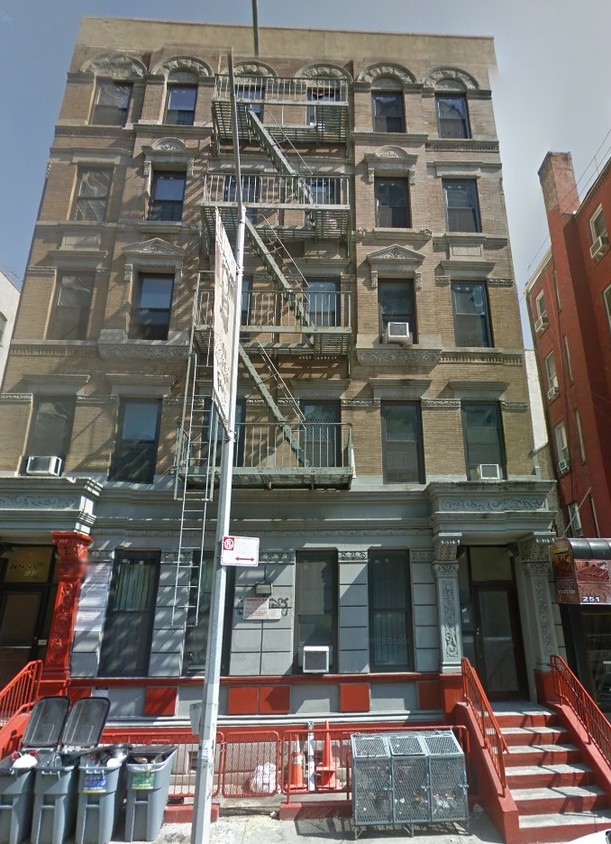
He was schooled to become a confectioner and eventually owned a candy store at 251 Congress Street, in Portland, Maine; that he operated from 1907-1915. He was listed in the city directory as selling ice cream and confections. Then in 1915 he returned to Orient, his beloved Maxell Hill and built his forever home. Sleeping in a tent until completed. 


Oscar was elected to the House of Representative  for the years 1937-1938 and 1949-1950. During the 94th legislature he served on the Indian Affairs and Temperance Committees.  Of personal importance to him was the Temperance Committee, for he alone managed to keep the state of Maine dry for many years. He was proud of the fact he held the position of Deacon in his church longer than his father.

On March 3, 1931, Oscar sailed aboard the SS Governor Cobb out of Tampa, FL for a five-day trip to Cuba. In his diary, "Impressions of a visit to Gay Havana, The Paris of the Western Hemisphere" he summed up his visit to the island this way: "the Cubans ae a friendly people and hold U.S. of America and its' people in high esteem".

The Cubans its (sic) all America, both North and South, but they always emphasize the United States of America to which they belong. On every hand, the names of General Wood and Teddy Roosevelt, and others, are to the sacred and they avoid being connected with Spain., even say 'we speak the Cuban and English language, not Spanish, where as a matter of fact, it is Spanish'.

Oscar toured the country via taxi or walking. Havana, he reported had 58 cigar factories, 2500 policemen, a population of 500,000 and 7000 bars. Oscar was impressed by the beauty of Havana and its magnificent buildings.

He visited cemeteries and learned how they buried their own. Went to many churches and spoke of Lady Lourdes her statue and a small metal box that held her ashes. He spoke of Columbus Temple, here Christopher Columbus held the first mass under a "Free Sabor" tree, meaning cotton and Silk. He spoke of beautiful paintings of the first mass, the first Congress and the first inauguration.

He tells of the square that was used to sell slaves and where slaves were put to death, often times, for trifling matters. In the old city the slaves built a wall to defend and protect against pirates. The slaves carried the stones on bare shoulders and worked under the lash at all times.

Oscar, a strong prohibitionist, firmly believed that "with the Cubans taking the U.S. as their example someday will adopt prohibition". He truly believed in the words of Gifford Gordon, "Hold on, America! The son follows in the footsteps of the father and one day, Cuba will follow their father in prohibition".

Oscar died December 31, 1961.

(Cuba was founded on October 10, 1868. The island was inhabited by various cultures prior to the arrival of the Spanish explorer Christopher Columbus in 1492. After Columbus' arrival, Cuba became a Spanish colony, ruled by a Spanish governor in Havana. In 1762, Havana was briefly occupied by Great Britain, before being returned to Spain in exchange for Florida. A series of rebellions during the 19th century failed to end Spanish rule. However, the Spanish-American War resulted in a Spanish withdrawal from the island in 1898, and following three-and-a-half years of subsequent US military rule, Cuba gained formal independence in 1902.)


Thursday, July 29, 2021

Eugenie Belle - 1918 Pandemic

 Eugenie Belle Smith was born on July 30, 1891 in Bridgewater, Massachusetts to Joseph H. Smith and Laura Eunice Jones. Eugenie was sister to my paternal grandfather, Malcolm Leroy Smith.  

Eugenie married Herbert Farley Merrey on May 27, 1913. To them three children were born. Gertrude Eunice, named for her mother, Edwin (Eddie) Leroy, named for her brother Malcom Leroy, and Joseph, named for her father.

Life was wonderful, that is until the Pandemic of 1918 known as the Spanish Flu infected a estimated 500 million people around the world. In the United States, 675,000 died.

The only defense at that time was isolation quarantine, good hygiene, disinfectants and limitations of gatherings that many did not follow.

It was the second wave in the fall of 1918 that lasted three months, caused by a mutant virus that was especially brutal.  This took the life of Eugenie Belle on October 7, 1918 at the age of 27. She left behind a husband and three young children, a daughter age five, a son age two and an infant son, one month old.

Eugenie's husband, Herbert remarried to Anna Sophia Copeland. He died in 1970 and Anna died in 1933. They all rest together in Hillside Cemetery in Bridgewater.  Also in this cemetery lies her mother, her brother Malcolm and his wife, Mary Ann Pierce.

Eugenie's brother Malcolm named a daughter after his sister, Eugenie Belle born in 1921. She passed away June 10, 2020 in her 99th year.

We are at this moment in time under siege of a pandemic known as Covid-19. Many have died around the world.  At warp speed vaccines have been developed and history repeats as in 1918, many people don't follow recommendations. We are now in the grips of a mutant virus that is more contagious and deadly.  History is repeating itself and as we watch the numbers of those infected increase, more lives will be lost.

I've been vaccinated to protect not only me, but also my family and those I love.  Have you been vaccinated? 

Related Posts Plugin for WordPress, Blogger...